Abstract
References
Sorry, not available.
Click the PDF button.
Information
The purpose of this article is to identify a possible causal channel through which resource abundance might affect economic growth. By using a different proxy for natural resource abundance, we find that, although the level of corruption increases in resource abundance in most countries, its deleterious effect is mediated, or even reversed, when the quality ofthe rule of law is sufficiently high. Our result, therefore, explains that, with successful legal reforms reducing corruption, resource-rich countries may promote economic growth, countering the conventional resource curse hypothesis that an abundance of natural resources unconditionally slows economic growth.
본 연구의 목적은 풍부한 자원이 경제발전에 미치는 파급효과가 제도의 수준에 따라 다를 수 있음을 살펴본다. 자원 풍부성을 측정하기 위한 다양한 대리변수를 가지고 59개 국가를 대상으로 실증 분석한 결과는 다음과 같다. 첫째, 부패수준이 높아질수록 자원의 저주(풍부한 자원이 오히려 경제발전에 부정적인 파급효과를 미치는 현상)는 더욱 심각해짐을 발견하였다. 둘째, 법치 수준이 상승할수록 자원의 저주는 약화됨을 발견하였다. 따라서 자원이 풍부한 국가들이 성공적인 경제발전을 이룩하기 위해서 우선적으로 마련해야 할 조건은 부패를 줄일 수 있는 법 제도 개선임을 본 논문은 주장한다. 즉, 자원의 저주는 자원의 풍부함에서 발생하는 것이 아니라 부패를 만연케 하는 후진적인 법 제도가 보다 근본적인 배경이라 판단된다.
Click the PDF button.
- Publisher :Korea Energy Economic Institute·Korea Resource Economics Association
- Publisher(Ko) :에너지경제연구원·한국자원경제학회
- Journal Title :Korean Energy Economic Review
- Journal Title(Ko) :에너지경제연구
- Volume : 10
- No :2
- Pages :27-53
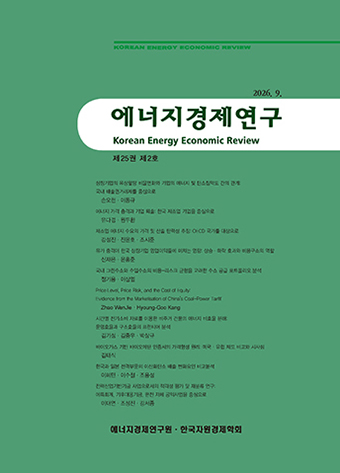 Korean Energy Economic Review