Abstract
References
Sorry, not available.
Click the PDF button.
Information
The objective of this study is to discuss and establish the concept of energy vulnerability relating to energy security, to develop energy vulnerability measuring index in terms of macroeconomic effects and to develop a theory for policy measures in order to resolve energy vulnerability issues based on the designed index. In order to improve the energy vulnerability index, there are two methods for Korea:(1) give priority to reduce market risk and then reduce supply risk, and (2) give priority to reduce supply risk and then reduce market risk. Market risk tends to be managed by internal factors, such as energy intensity and ability to pay, and with this tendency it is relatively easier to resolve the issues than domestic reserves or geopolitical risk. Therefore, it is recommended to improve market risk first and then supply risk.
본 연구의 주목적은 에너지 취약성 측정지수를 개발하고 이를 토대로 에너지 취약성에 영향을 미치는 요인을 분석하는데 있다. 본 연구에서는 주성분분석(principal component analysis:PCA) 방식을 사용하여, 우리나라를 포함한 OECD 19개국을 대상으로 에너지 취약성 지수를 산출하였다. 취약성 요소를 시장위험과 공급위험으로 구분할 경우 국가별로 상당한 차이를 보였다. 우리나라의 경우, 시장위험지표가 공급위험지표보다 더 중요한 요소로 나타났다. 따라서 시장위험 개선대책이 공급위험 관리대책보다 에너지 취약성 문제해결에 더욱 효과적인 것으로 추정할 수 있다.
Click the PDF button.
- Publisher :Korea Energy Economic Institute·Korea Resource Economics Association
- Publisher(Ko) :에너지경제연구원·한국자원경제학회
- Journal Title :Korean Energy Economic Review
- Journal Title(Ko) :에너지경제연구
- Volume : 7
- No :2
- Pages :103-138
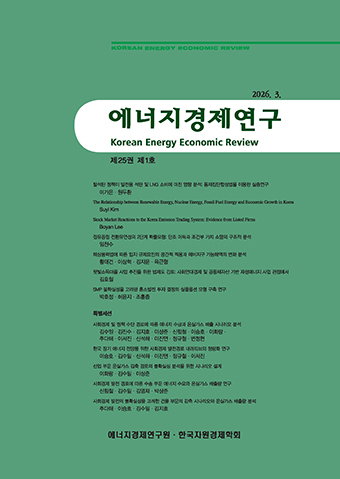 Korean Energy Economic Review